
Introduction:
What Is Wabi-Sabi?
Wabi-sabi is a Japanese aesthetic philosophy that finds beauty in the weathered, the irregular, and the unfinished. Instead of chasing a machine-made polish, it embraces the natural cycle of growth and decay. In a world obsessed with symmetry, wabi-sabi quietly argues that a jagged line or a scorched surface isn’t a mistake, it’s a fingerprint of the earth.
At its core, this mindset values what is humble and raw. It celebrates objects that feel human rather than industrial, shaped by hands and heat rather than a mold.
The Origins of Wabi-Sabi
This philosophy emerged in Japan between the 14th and 16th centuries, deeply rooted in Zen Buddhism. Zen teachings emphasize mindfulness and the acceptance of transience. These ideas naturally bled into Japanese art and daily life.
The turning point was the traditional tea ceremony. Tea masters began rejecting flashy, ornate porcelain in favor of rough, unrefined stoneware. These choices were intentional: the rugged surfaces invited a sense of calm and presence. Over centuries, this “lowly” pottery became the gold standard of Japanese craft.
Why Wabi-Sabi Belongs to Pottery
Pottery and wabi-sabi are a perfect match because clay is inherently chaotic. It bends, shrinks, and reacts to the kiln’s fire in ways no potter can fully predict.
- The Maker’s Mark: A warped rim or a thumbprint in the glaze isn’t a defect; it’s a record of a moment in time.
- Unique Identity: Unlike factory-produced ceramics, a wabi-sabi piece can never be replicated. Its value comes from its singular, honest existence.
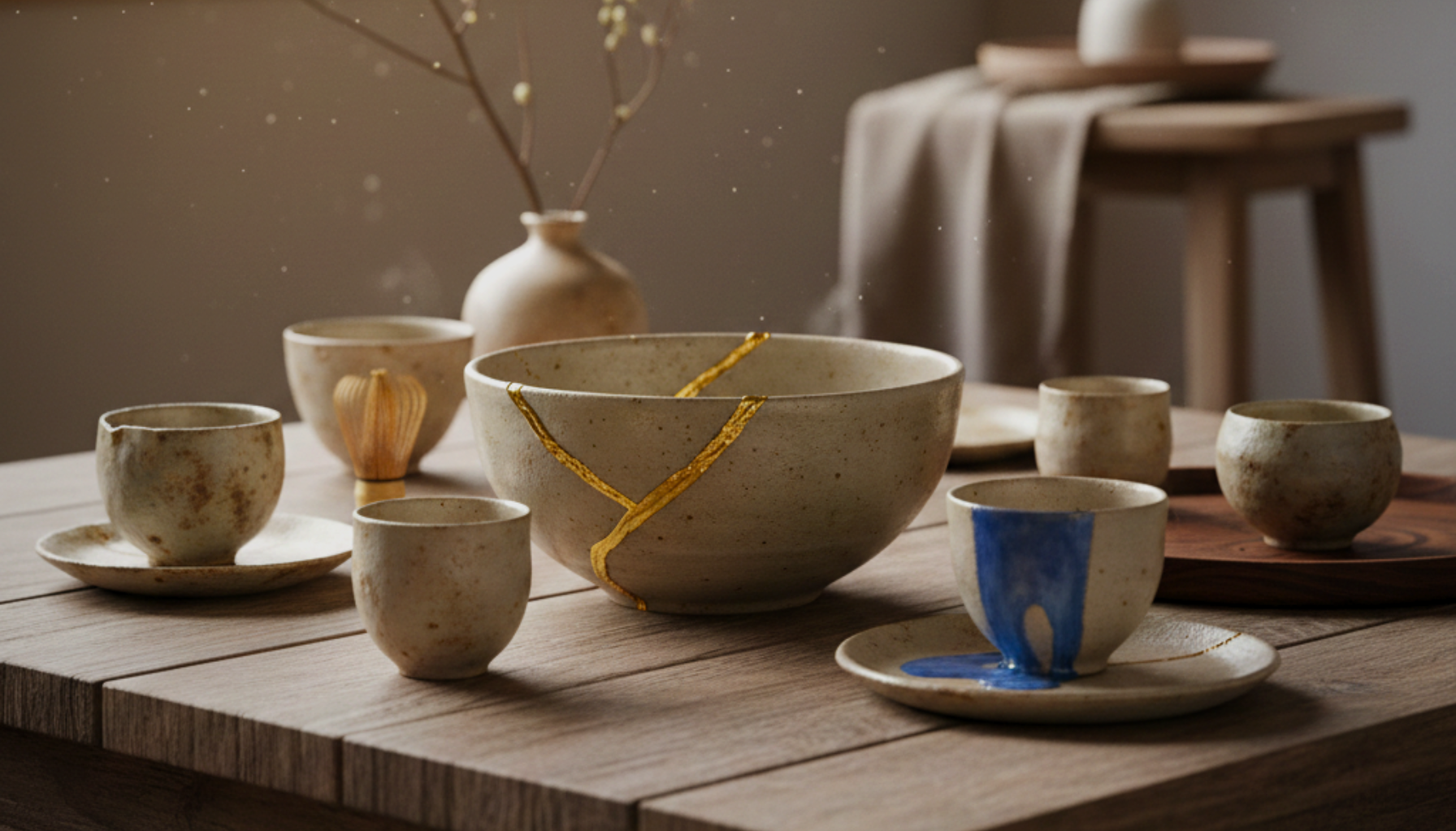
- Evolution: Even “mistakes” are elevated. A crack isn’t the end of a pot; it’s the beginning of a story about how the earth and fire interacted with your hands.
Why Wabi-Sabi Still Matters Today
Modern life is fast and demands a “perfect” aesthetic. Our pottery classes offer a way out of that pressure. We invite you to slow down, get your hands dirty, and appreciate the beauty in the wobbles.
Imperfection as Meaning, Not Flaw
In our studio, “broken” doesn’t mean “worthless.” A crack suggests resilience; a worn edge expresses warmth. This perspective changes how you create. When you stop worrying about making a “perfect” bowl, you start enjoying the feel of the clay. The goal isn’t to produce a masterpiece, it’s to produce something honest.
Conclusion
Embracing wabi-sabi means finding peace in the imperfect. It’s a reminder that our own “cracks” and stories are what make us unique. When you sit at the wheel, you aren’t just making a pot; you’re practicing the art of being human.
Get Your Hands Dirty
Ready to embrace the beauty of imperfection? Join one of our upcoming pottery classes and learn to create with soul, not just symmetry. No experience (or perfectionism) required.

Comment (0)