
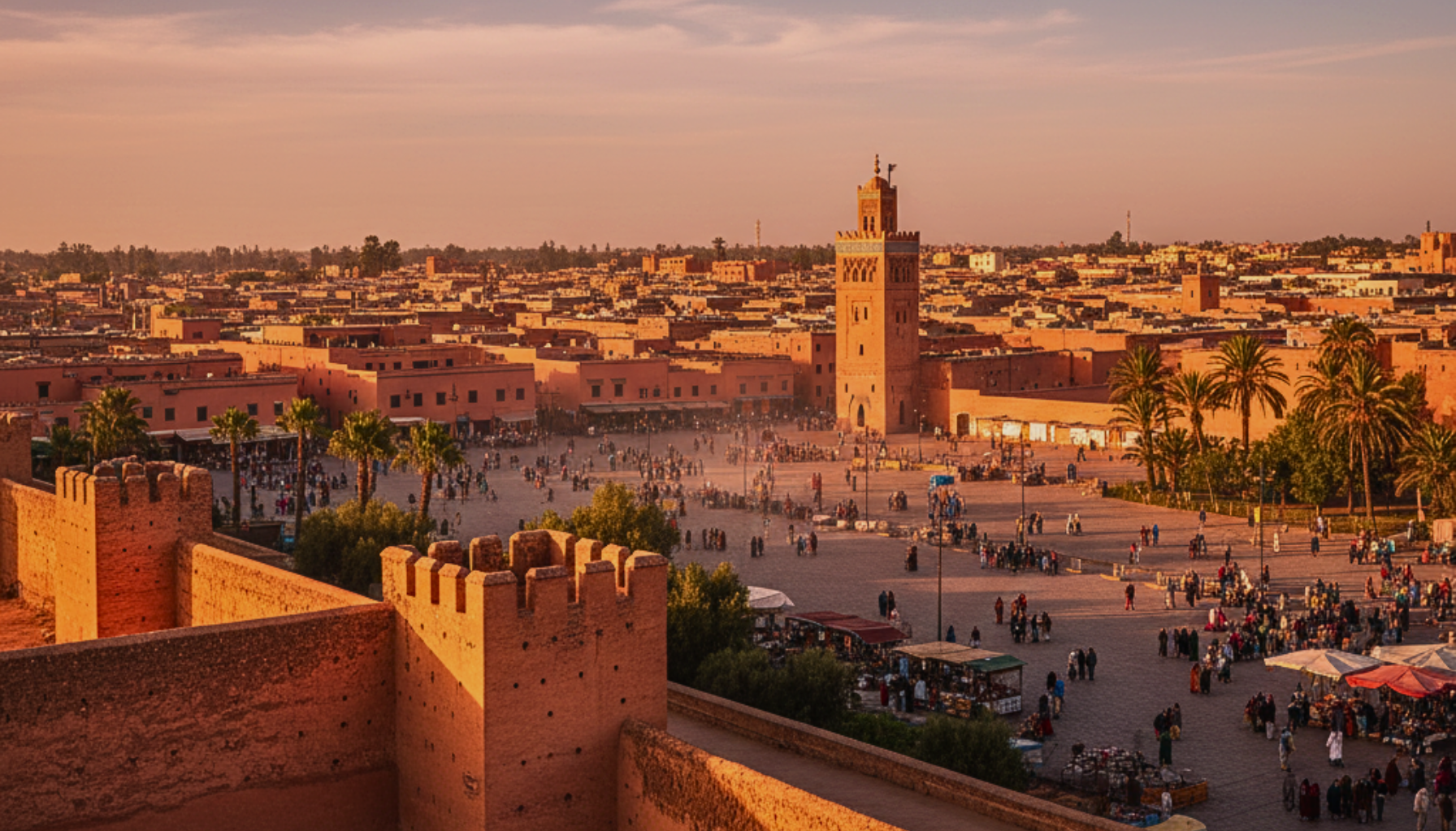
The Geologic DNA of the “Ochre City”
Marrakech isn’t red because of a design choice or a modern branding campaign; it is red because it is literally built from the ground it sits on.
When the Almoravid dynasty founded the city in 1062, they didn’t have the luxury of importing marble or timber. They looked down at their feet and saw an endless supply of ferruginous soil, earth packed with high concentrations of iron oxide.
From Tabia to Architecture
The city was constructed using an ancient technique called Tabia. This involved ramming a mixture of local red earth, lime, and crushed gravel into wooden molds to create thick, heat-resistant walls. Because the soil across the Haouz Plain is naturally rich in iron, the resulting structures took on that iconic range of pink, rose, and deep terracotta. This wasn’t about aesthetics; it was about survival and utilizing the thermal mass of the earth to stay cool in the desert heat.
A Law Preserved in Clay
The “Red City” title became permanent not just through history, but through modern mandate. During the French Protectorate in the early 20th century, officials passed laws requiring all new buildings to maintain the traditional color palette of the local earth to preserve the city’s visual soul. Today, whether it’s a 12th-century rampart or a 21st-century villa, the city remains a monochromatic tribute to the iron-rich mud of the plains.
The Connection to Your Hands
When you sit at a pottery wheel in this city, you aren’t just playing with generic clay. You are working with the same mineral composition that defines the skyline. The dust on your apron is the same material that built the Koutoubia Mosque and the massive ramparts surrounding the Medina. You aren’t just making a pot; you are shaping a piece of Marrakech’s physical history.
Conclusion: This Earth is in Your Hands
Marrakech’s “Red City” identity is more than a nickname—it’s a geological legacy. By using the very iron-rich soil that surrounds us, the city has managed to stay cool, sustainable, and visually iconic for nearly a millennium. When you work with clay here, you aren’t just making a souvenir; you are continuing a 900-year-old dialogue between the people of the Haouz Plain and the earth beneath them.
Ready to shape the city’s history yourself?
Book your spot at our next workshop and turn the “Red City” into your own masterpiece.

Comment (0)