
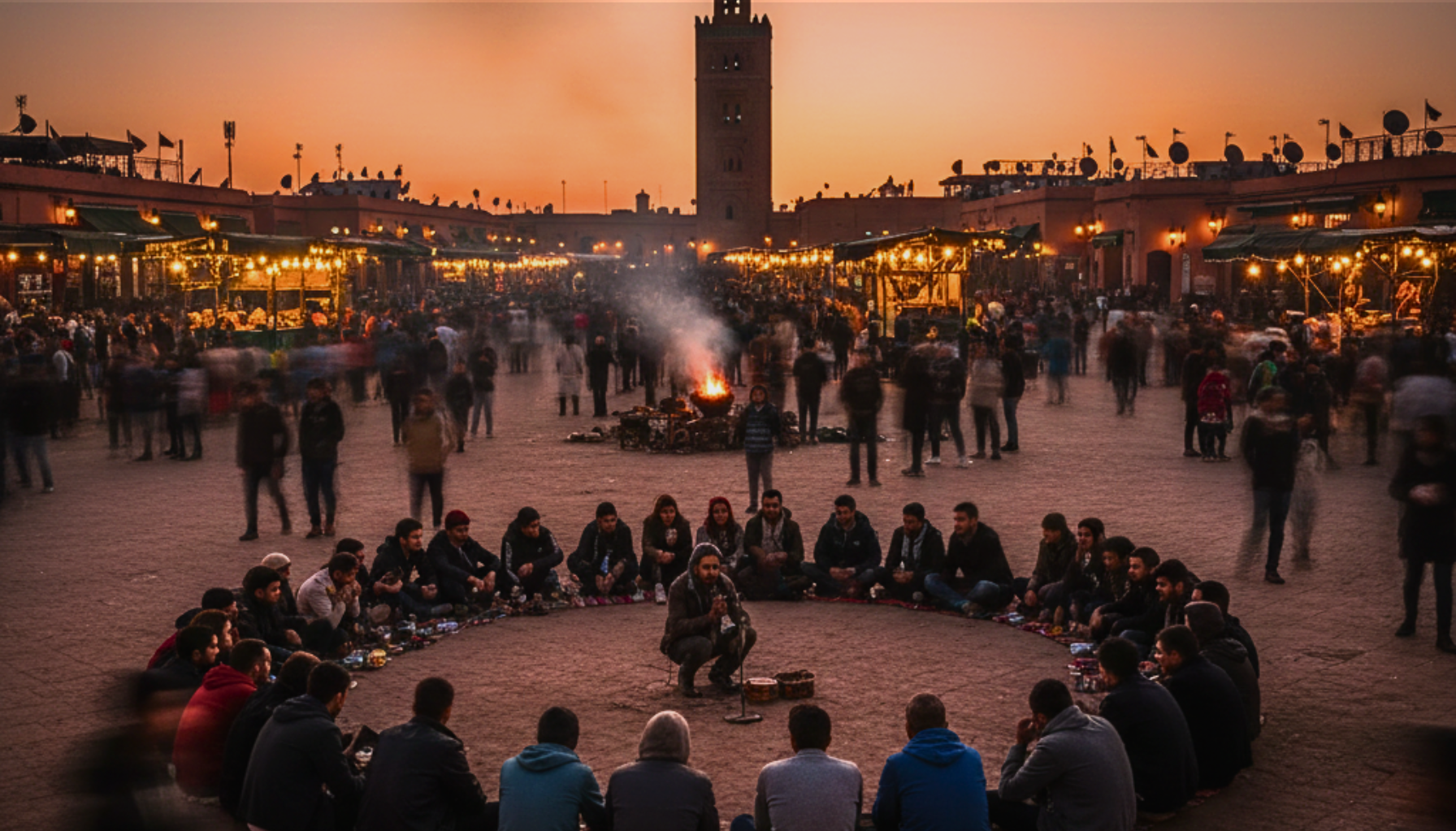
From Execution Ground to Market
Jemaa el-Fna wasn’t built for tourists. In the 11th century, it was a brutal site for public executions. Its name translates to “Assembly of the Dead” because the Sultans used this open space to display the severed heads of rebels. It was a massive, dusty warning to the public long before it ever hosted a food stall.
The Fight Against the Parking Lot
In the 20th century, the square almost disappeared. Urban developers tried to pave it over to create a permanent parking lot. The local community stopped the project, arguing that the square’s value was the daily activity, not the real estate. Because they won, it is now protected by UNESCO for its traditions rather than a physical building.
A Daily Setup, Not a Permanent Building
Unlike typical monuments, Jemaa el-Fna is manually rebuilt every 24 hours. Every morning, the space is completely empty. By sunset, hundreds of vendors move in to set up kitchens and stalls from scratch. It is not a static piece of architecture; it is a functional workspace that only exists through daily manual labor.
The Connection to Your Hands
When you sit at a pottery wheel in this city, you aren’t just playing with generic clay. You are working with the same mineral composition that defines the skyline. The dust on your apron is the same material that built the Koutoubia Mosque and the massive ramparts surrounding the Medina. You aren’t just making a pot; you are shaping a piece of Marrakech’s physical history.
Conclusion
Jemaa el-Fna is proof that history isn’t just about old buildings, it’s about what people do with their hands every day. The square survives because people refuse to let the tradition die. Our pottery workshop follows that same logic: using the city’s raw red earth to keep traditional Moroccan craft alive and functional.
Ready to shape the city’s history yourself?
Book your spot at our next workshop and turn the “Red City” into your own masterpiece.

Comment (0)