
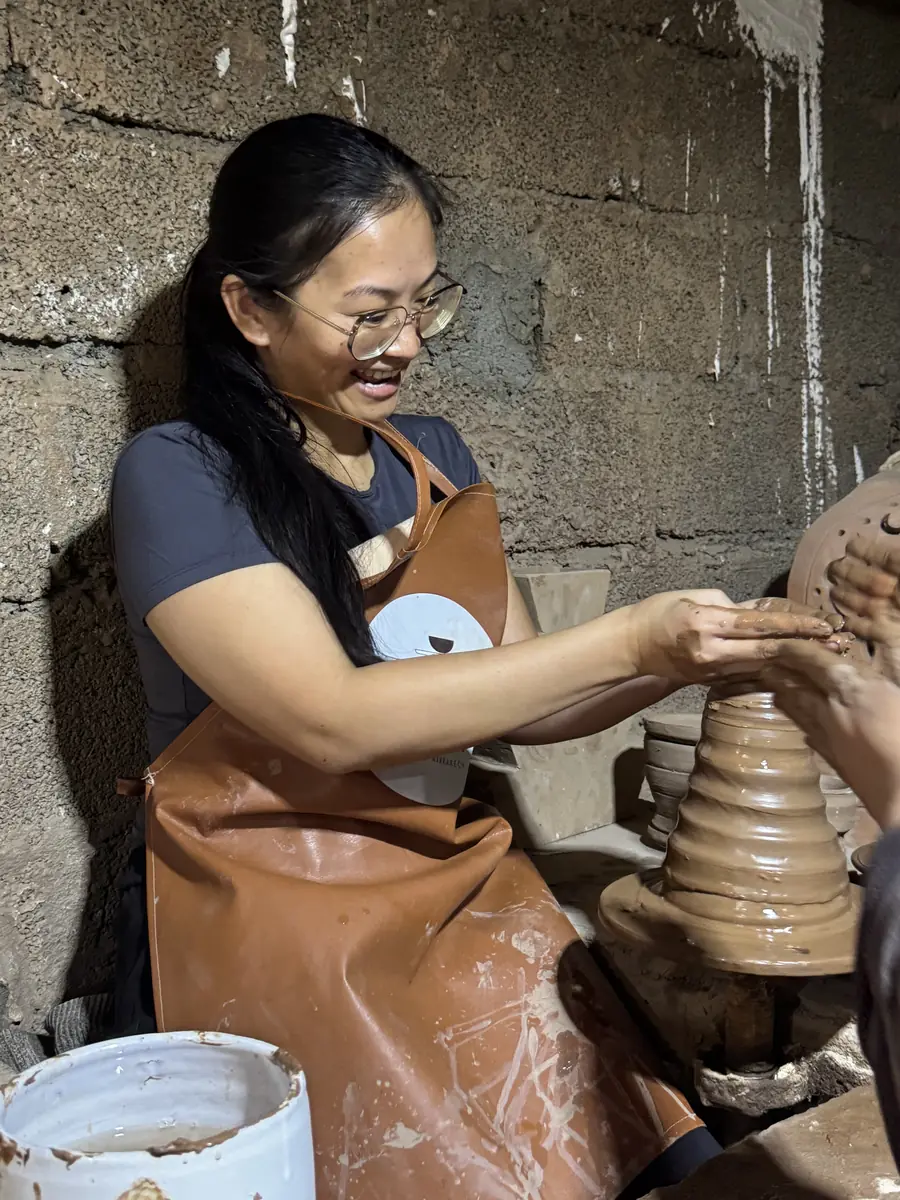
Yes, a pottery class in Marrakech is made for complete beginners. At Pottery Class Marrakech you do not need any experience: a local artisan guides you from the very first touch of the clay, and in about two hours you shape, glaze and finish your own piece. The class costs from 40€ per person, and clay, tools and a hot drink are included. This guide explains what actually happens, what to wear, what the clay does after you leave, and how to book, so you can walk in relaxed instead of nervous.
If you are still choosing between several activities, the short version is this: pottery is the one where you leave with something you made with your own hands, in a city where clay has been part of daily life for centuries. And you do not have to be “good with your hands” to enjoy it.
Is a pottery class in Marrakech really suitable for beginners?
It is the most common profile in the room. Most people who book have never touched a pottery wheel, and many are slightly worried that they will “ruin it”. The class is built around that worry. The clay is prepared for you before you arrive at the wheel, the artisan stands next to you, and the first gestures are taught slowly, one at a time.
Three things make a beginner class work, and they are worth knowing before you book:
- The artisan adjusts to you. Someone who has done this for years can see in two seconds why your clay is wobbling and correct it with a light touch on your hands. That is the difference between a class and watching a video.
- Nothing is graded. A slightly uneven bowl is not a failure, it is the point of handmade. Moroccan pottery traditions, from Safi to Fès, value pieces that carry the mark of the person who made them.
- The format is short and varied. Two hours go by quickly because you alternate between preparing the clay, working on the wheel, building by hand and glazing. You never sit through a long lecture.
Our visitors range from solo travellers and couples to groups of friends and families with children. On Google, the workshop is rated 5.0 from 21 reviews, and the comments come back to the same ideas: a patient instructor, a relaxed atmosphere and a piece you are proud to take home.
Wheel throwing and hand-building: what is the difference?
The class combines the two main ways of making pottery, and it helps to know what they are.
Wheel throwing
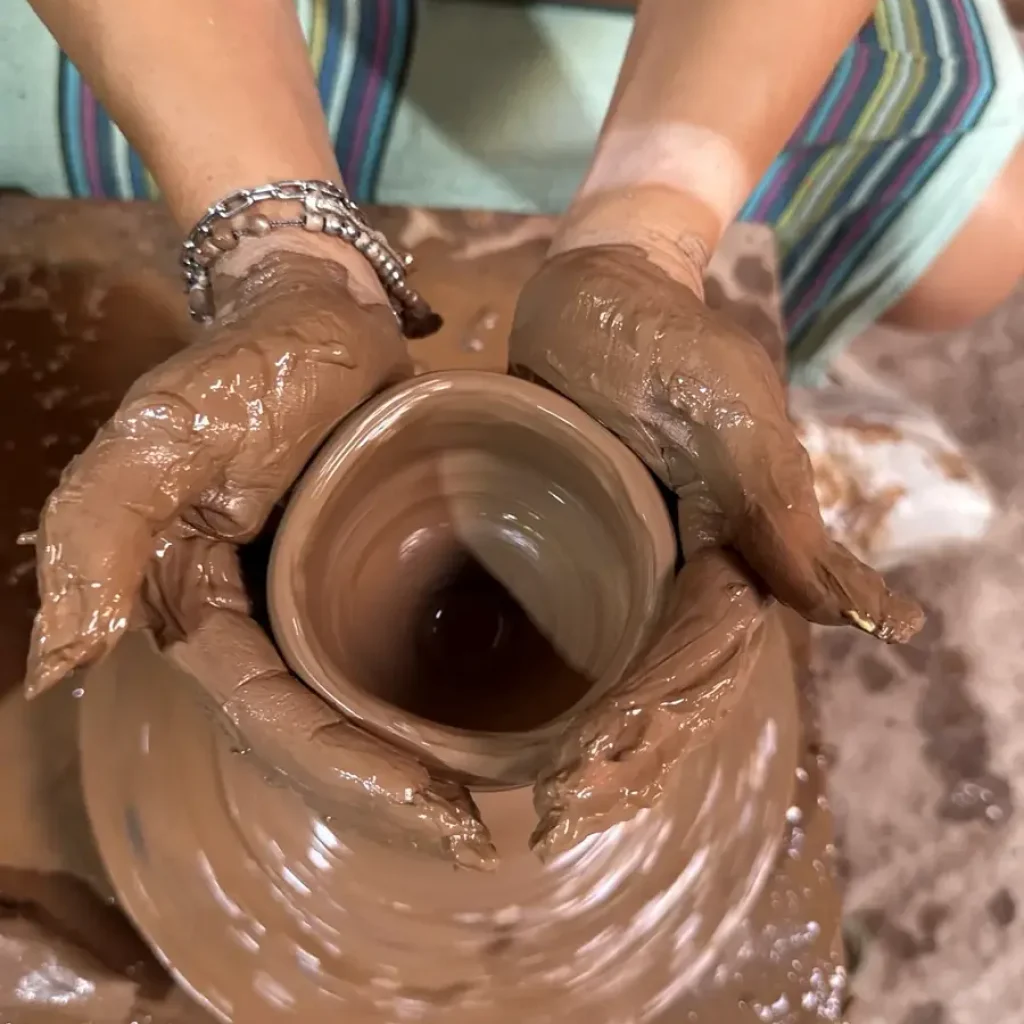
Wheel throwing is what most people picture: a ball of clay spinning on a wheel while your hands pull it up into a cup, a bowl or a vase. It looks like magic, and it is also physical and precise. The key steps are:
- Centring. The clay has to sit exactly in the middle of the wheel. If it is off by a little, everything that follows wobbles. This is usually the hardest moment for a beginner, and the one where the artisan helps most.
- Opening. You press your thumbs into the centre to create the hollow of your piece.
- Raising the walls. With one hand inside and one outside, you slowly pull the clay upwards. Steady hands and slow movements matter more than strength.
- Shaping. You widen, narrow or smooth the form to get the shape you want.
If you want to go deeper on the technique before you come, you will find a longer explanation in our upcoming guide to the pottery wheel for beginners. You do not need to read it to enjoy the class.
Hand-building
Hand-building means shaping clay without a wheel: pinching it between your fingers, rolling coils and stacking them, or cutting and joining flat slabs. It is slower and more forgiving than the wheel, which is why it works well for children, for people who prefer a calmer pace, and for anyone who wants to make something with a less round shape. Many of the small plates, dishes and decorative pieces you see in Moroccan homes are made this way.
In our class you try both, so you can discover which one you like. Some people fall for the wheel immediately. Others find that hand-building suits them better. Both are legitimate pottery.
Your two hours, step by step
Here is how the session unfolds, so nothing comes as a surprise.
1. Arrive and meet your artisan
You are welcomed with tea or coffee and you meet the artisan who will guide you. This is the moment to say whether you have done pottery before, whether you are travelling with children, and what you would like to make. A good artisan adapts the session to the group.
2. Feel the clay
Your first touch is the preparation of the clay by hand. Clay has to be worked before it goes on the wheel, so that it is smooth and free of air bubbles. You learn the first gestures here, and you also learn how the material feels: cool, heavy, slightly sticky, very responsive.
3. Raise it
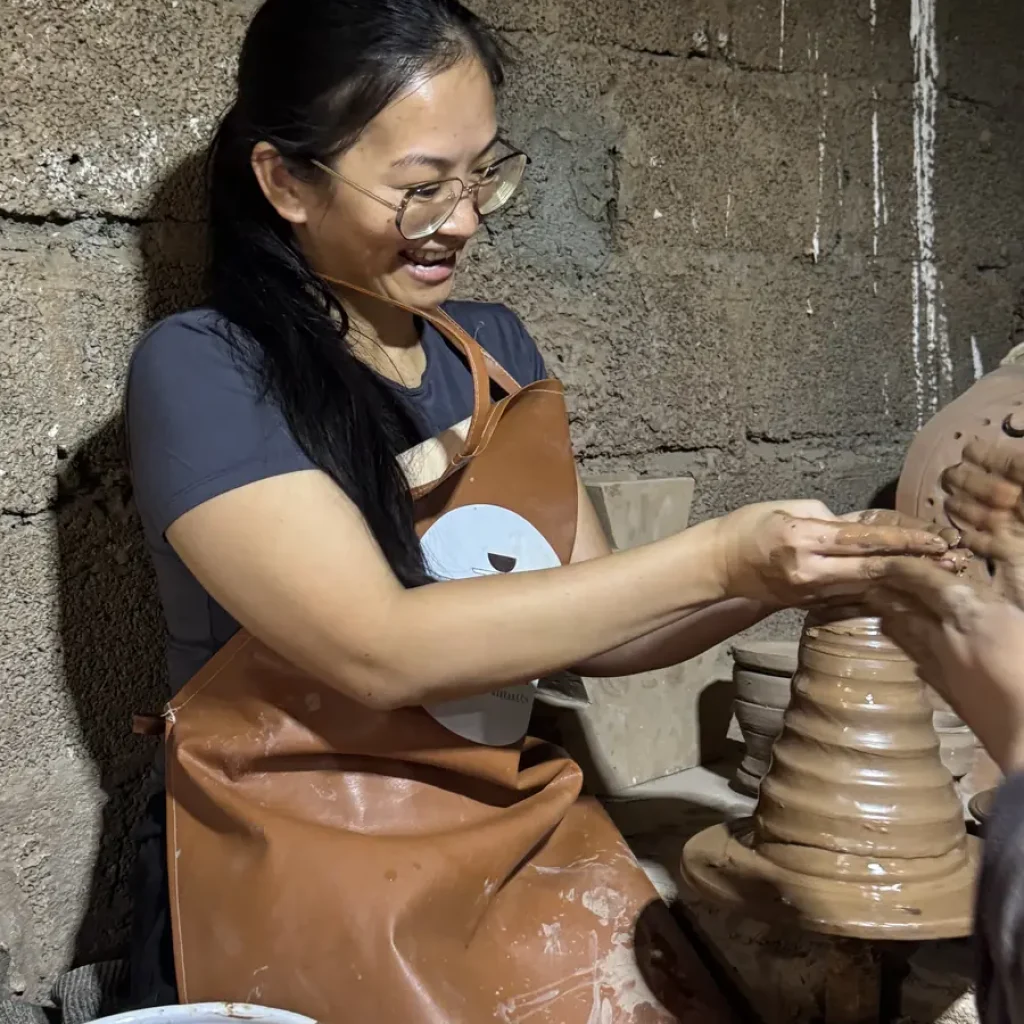
This is the main part of the class. You work on the wheel and by hand, guided step by step. Expect to try several times. The first attempt rarely stands up perfectly, and the artisan will help you get a result you are happy with. Guests regularly mention making bowls and even small tagines during the session.
4. Glaze
Glaze is what gives pottery its colour and its smooth, shiny surface. Across Morocco you recognise it in the deep blues, greens and ochres of doorways, fountains and tableware. With your artisan, you choose how to give your piece colour using the workshop’s techniques.
5. Finish
You complete your piece and ask the practical questions: how long it needs to dry, when it is fired, and how and when you can collect it. We recommend asking this at the end of the class, because timing depends on your date and on how the kiln is loaded. Ask your artisan, or message us on WhatsApp.
What happens to the clay after you leave?
Most beginners are surprised by this part, so it is worth understanding. Clay is not finished when you stop working on it. It goes through several stages:
- Drying. Your piece must dry slowly and completely. As water leaves the clay, it shrinks slightly. Drying too fast can crack a piece, which is why it is dried in a controlled way rather than in direct sun.
- First firing. A first firing in the kiln turns soft clay into a hard, durable material. In this state the piece is porous and fragile compared with the final result.
- Glazing and final firing. The glaze melts in the kiln and becomes a glassy layer. This is when the colour you chose appears, and it often looks different from the dull glaze you applied by hand, because glaze changes colour in the heat.
This is why the finished piece may look slightly different from what you imagined, and why it feels like a small surprise when you collect it. If you are travelling and have a flight to catch, tell us your departure date when you book, so we can tell you what is possible. We do not promise a collection date before checking your booking.
If you want something you can take home on the same day, the zellige and ceramic painting workshops are designed to let you leave with your finished piece. We compare the three options further down.
What is included, and what does it cost?
The pottery workshop starts from 40€ per person. The price covers:
- The clay
- Tools and equipment
- Instruction and on-site help from a local artisan
- Tea or coffee
The session lasts 2 heures. Bookings start from one guest, and groups of up to 50 people can be accommodated. The workshop is available in Arabic, English, Spanish and French, so you can ask questions in the language you are most comfortable with. Cancellation is free up to one day before your class.
The price is per person, so a couple pays for two and a family pays for each participant. For groups, private sessions and special requests, message us on WhatsApp and we will tell you what is possible and what it costs.
What to wear and what to bring
Clay is messy in the best possible way, and you will have wet hands for most of the session. A few practical rules:
- Wear clothes you do not mind getting a little dirty. Clay and glaze can mark light fabrics. Dark or old clothes are a good idea.
- Short sleeves or sleeves that roll up easily. You will be working with your forearms.
- Remove rings, bracelets and watches. Clay gets into every crevice and can scratch your piece.
- Keep your nails short if you can. Long nails make it harder to pull the clay cleanly and can leave marks.
- Comfortable closed shoes. You will be sitting at a wheel and walking around a workshop.
- Bring your phone, and keep it away from wet hands. You will want photos and a short video of the wheel, but ask a friend to film while you work, or wipe your hands first.
- Bring water in hot months. A hot drink is included, but Marrakech summers are dry and warm, and you will appreciate a bottle.
Seven beginner tips to make your piece better
- Go slowly. Speed is the enemy of the wheel. Slow hands give straighter walls.
- Keep your elbows still. Rest your arms against your body or your knees. A stable base steadies the clay.
- Do not fight the clay. If it feels like a struggle, you are pressing too hard. Ease up and let the artisan show you the pressure.
- Use water, but not too much. A little water helps your hands glide. Too much makes the clay collapse.
- Keep it simple. A small, well-made bowl or cup is more satisfying than an ambitious shape that sags. You can always go bigger next time.
- Ask questions. The artisan is there to teach. Ask why something worked or failed, and you will learn faster.
- Accept imperfection. The handmade quality is why the piece feels personal. A slight tilt is a memory, not a mistake.
Who is the class for?
Because the class is beginner friendly and adaptable, it fits many situations:
- Solo travellers. You are welcome from one guest. A small group, or even a private-feeling session with one artisan, is an easy way to meet people and do something real.
- Couples. Making something side by side, with plenty of laughter at the first wobbling bowls, is a popular activity on a trip.
- Friends. Two hours of shared concentration is a good way to spend an afternoon together.
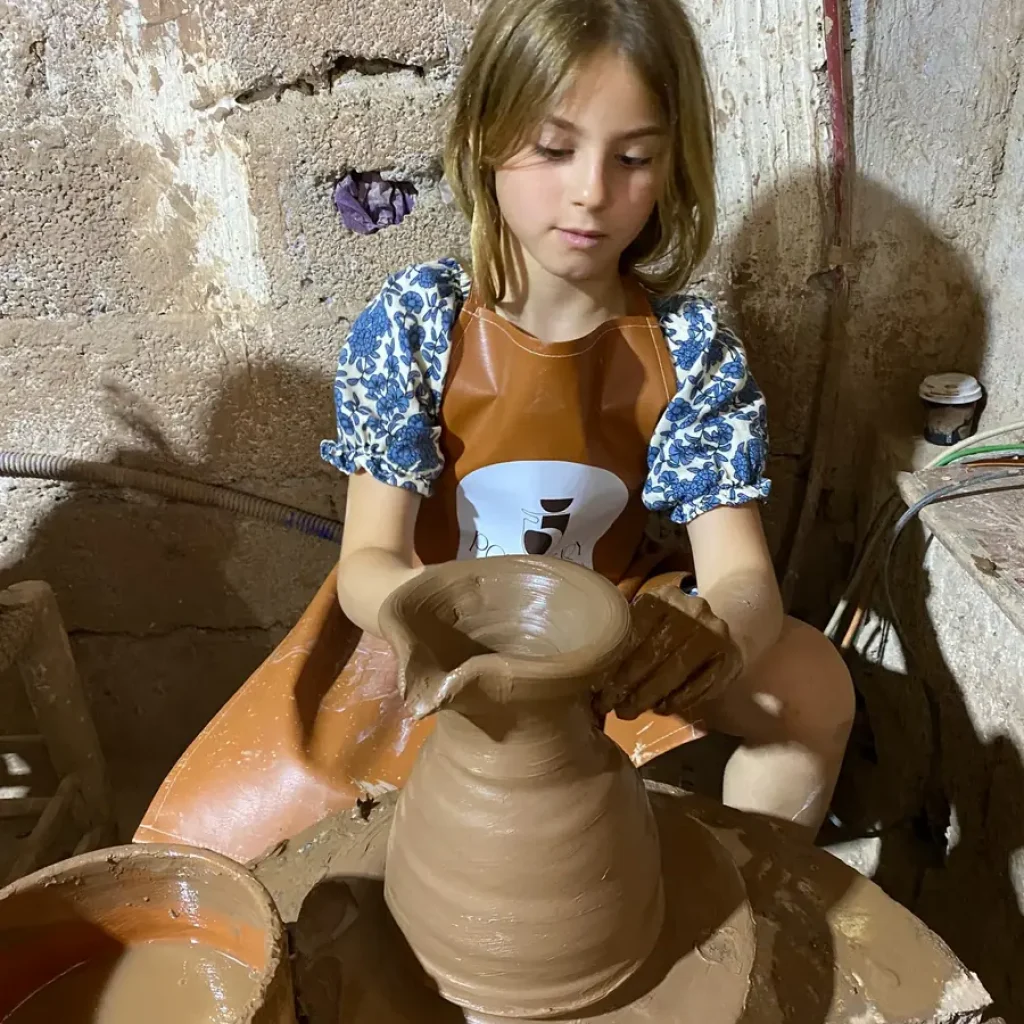
- Families. Several guests mention the workshop as a great experience with children, and the artisans are known for being patient. If you are bringing children, tell us their ages when you book so we can plan the session. We cover this in more detail in our guide to family pottery classes in Marrakech.
- Residents. If you live in Marrakech, pottery is a calm, creative break from screens, and a good way to introduce a friend or a visitor to a Moroccan craft.
- Groups and teams. Groups of up to 50 people can be accommodated; contact us for the details.
Where is the workshop, and when should you go?
Bookings are made through our office in Guéliz, Marrakech. The exact workshop address is sent with your confirmation, together with the details of your session. We do this so that each group gets the right instructions for its date.
As for timing, Marrakech is pleasant for an indoor creative activity all year round. In the hottest months, many visitors prefer a session that avoids the middle of the afternoon, and a pottery class in a shaded workshop is a good way to escape the heat. In the cooler winter months, it is a warm, sheltered activity for a rainy day. When you book, tell us your preferred date and time and we will confirm what is available.
Pottery, zellige or ceramic painting: which one should you choose?
We offer three hands-on workshops. They are all two hours long, beginner friendly, and led by local artisans. Here is how they differ:
| Workshop | What you do | From | Best if |
|---|---|---|---|
| Poterie | Wheel throwing, hand-building and glazing | 40€ | You want to shape clay and learn the wheel |
| Zellige | Cut and assemble Moroccan tile mosaic and take a small piece home | 60€ | You love geometric patterns and architecture |
| Ceramic painting | Paint a plate, bowl or tile with traditional motifs and keep it | 40€ | You prefer colour and drawing to clay |
If you only have time for one activity and you want to make something from scratch, choose pottery. If you want to leave with a finished object that you can pack the same day, choose ceramic painting or zellige. If you are not sure, message us on WhatsApp and describe your group: we will point you to the right one.
How to book your pottery class
The simplest way is to message us on WhatsApp at +212 660 86 10 10. Tell us your date, the number of guests and any children’s ages, and we will confirm. You can also choose your date and book online on the pottery workshop page, or write to book@potteryclassmarrakech.ma.
Cancellation is free up to one day before your class, so you can plan with confidence. And if you would like to bring home something handmade without taking a class, our shop carries handmade ceramic cups, mugs, bowls and a plate, made by artisans of Marrakech.
Frequently asked questions
Do I need any experience to take a pottery class in Marrakech?
No. The class is designed for complete beginners, and the artisan guides you from the very first step. Experienced hands are welcome too.
Is the pottery wheel difficult?
It takes a few tries to feel the clay centre itself, which is normal for everyone. The artisan helps you with your hands and your pressure, and you also try hand-building, which is gentler. Most beginners finish with a piece they are happy with.
Are materials included in the price?
Yes. The clay, tools and equipment are included, together with the instruction and on-site help, and tea or coffee.
Combien de temps dure un atelier ?
The class lasts two hours.
Puis-je garder ce que je crée ?
Yes, it is your piece. Pottery has to dry and be fired before it is finished, so ask the artisan at the end of the class about drying, firing and pickup, and tell us your departure date so that we can advise you.
What languages is the class available in?
Arabe, anglais, espagnol et français.
Can I book for just one person?
Yes. Bookings start from one guest, and groups of up to 50 people are possible.
Can I cancel if my plans change?
Cancellation is free up to one day before the class.
Ready to try it? Book your pottery class in Marrakech or message us on WhatsApp, and shape your first piece of Moroccan clay.

Comment (0)