
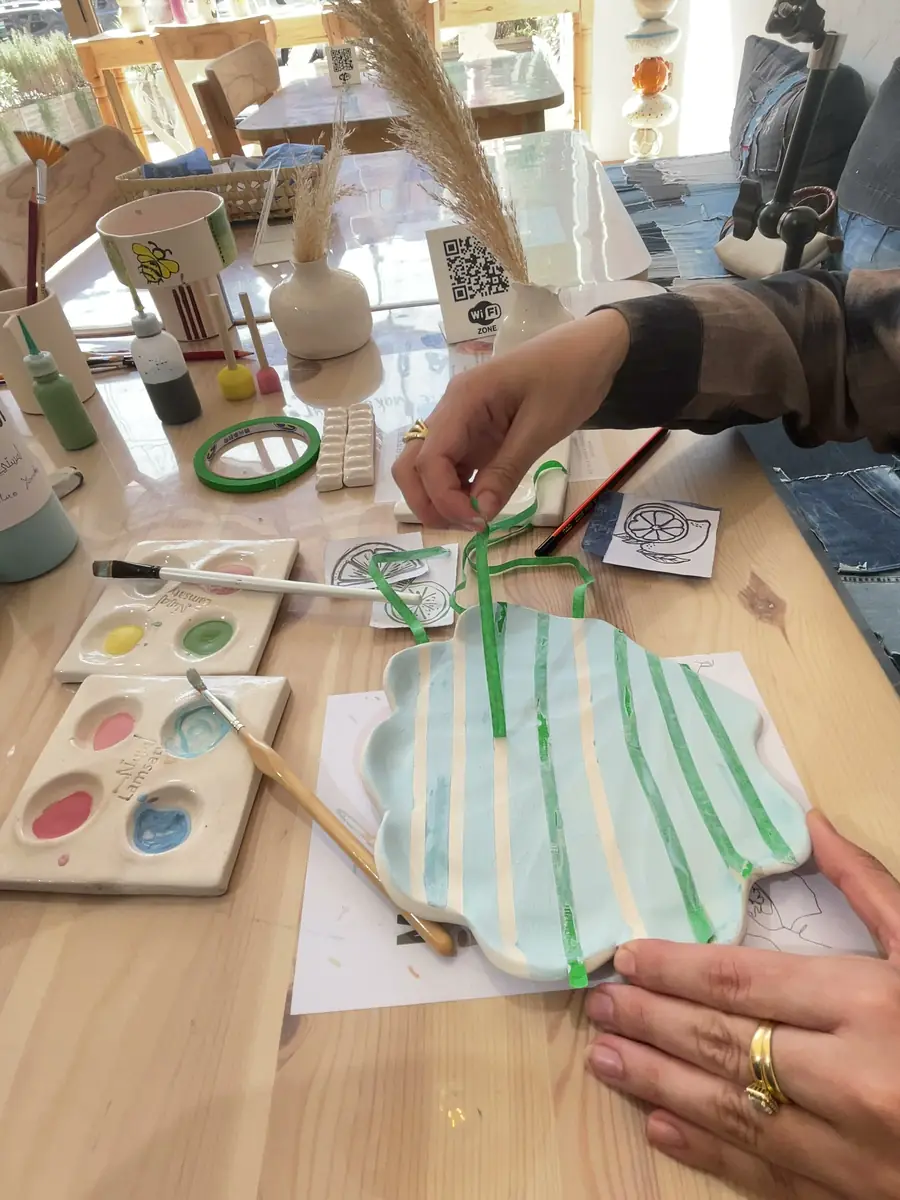
A ceramic painting class in Marrakech lets you decorate a plate, bowl or tile with traditional Moroccan patterns and take your finished piece home. The class lasts two hours, needs no experience, and starts from 40€ per person, with all materials, expert guidance and a hot or cold drink included. It runs Monday to Saturday at 10:00, 11:00, 15:00, 16:00 and 17:00. This guide explains what you paint, how the session works, which motifs you will meet, and how to book, so you can arrive with ideas and no pressure.
If you love colour more than clay, or if you are travelling with children, ceramic painting is probably the most relaxed way to make something with your own hands in Marrakech.
What is a ceramic painting class?
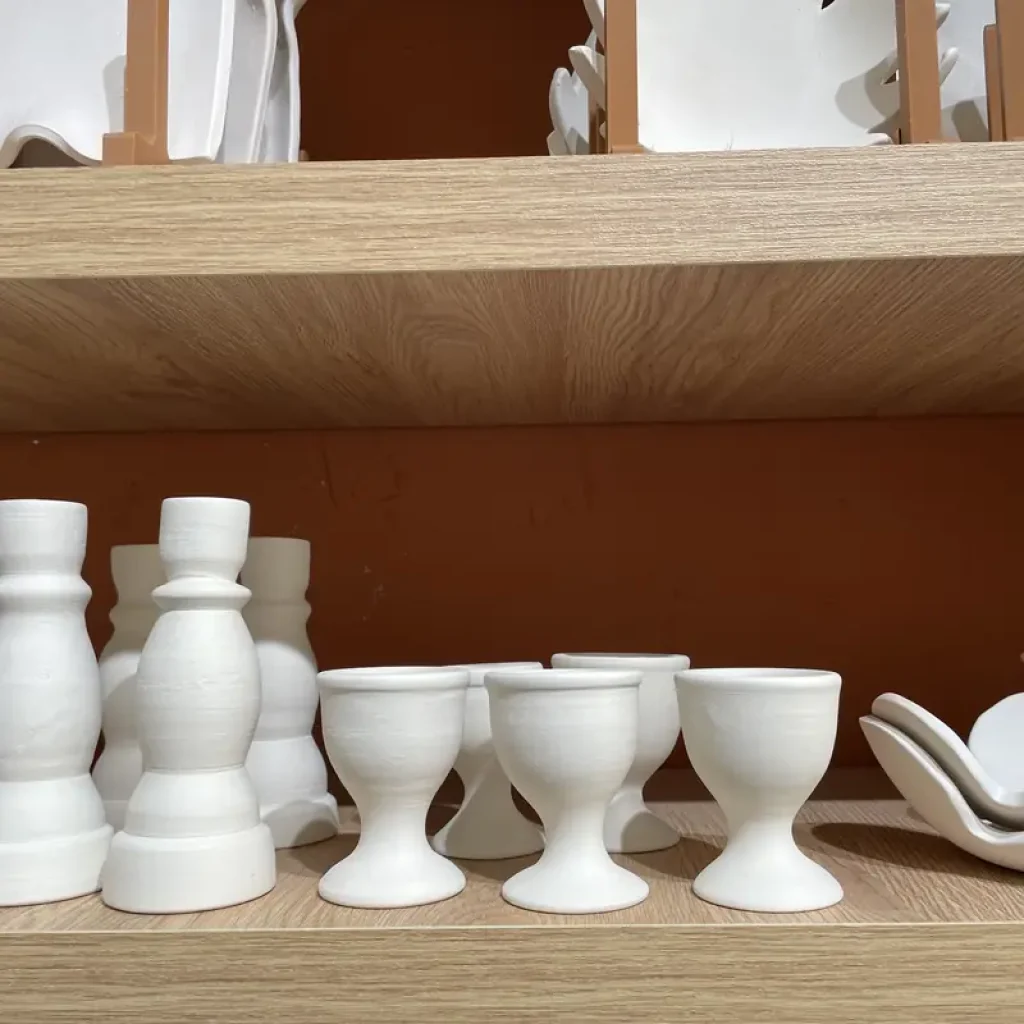
You start with a plain ceramic piece, and you turn it into your own work of art. In our workshop you choose a plate, a bowl or a tile from the shelves of white ceramics, sketch a design with the guidance of an artisan, and paint it by hand. The motifs are inspired by two great traditions of Moroccan decoration: zellige, the geometric tile mosaic, and the pottery of Fès, known for its blue and white and its detailed patterns.
You do not need to know how to draw. The artisan teaches you how to hold the brush and how to build geometric motifs, starting from the very first brushstroke. The result is a decorated piece that carries your choices, and that you keep.
What happens in the class, step by step
1. Welcome and a drink
You are welcomed warmly and offered a complimentary hot or cold drink. This sets a relaxed pace for the afternoon.
2. Choose your piece
You pick a plate, a bowl or a tile, and you choose your colours. Take your time: plates give you the most room for a pattern, bowls let you paint inside and outside, and a tile is a good choice if you want something small that is easy to pack and display.
3. Discover the motifs
Your artisan introduces traditional Moroccan motifs and the tools of the craft. This is where the activity becomes more than painting: you learn why certain shapes repeat across Moroccan buildings, and how simple elements can combine into a design.
4. Sketch and paint
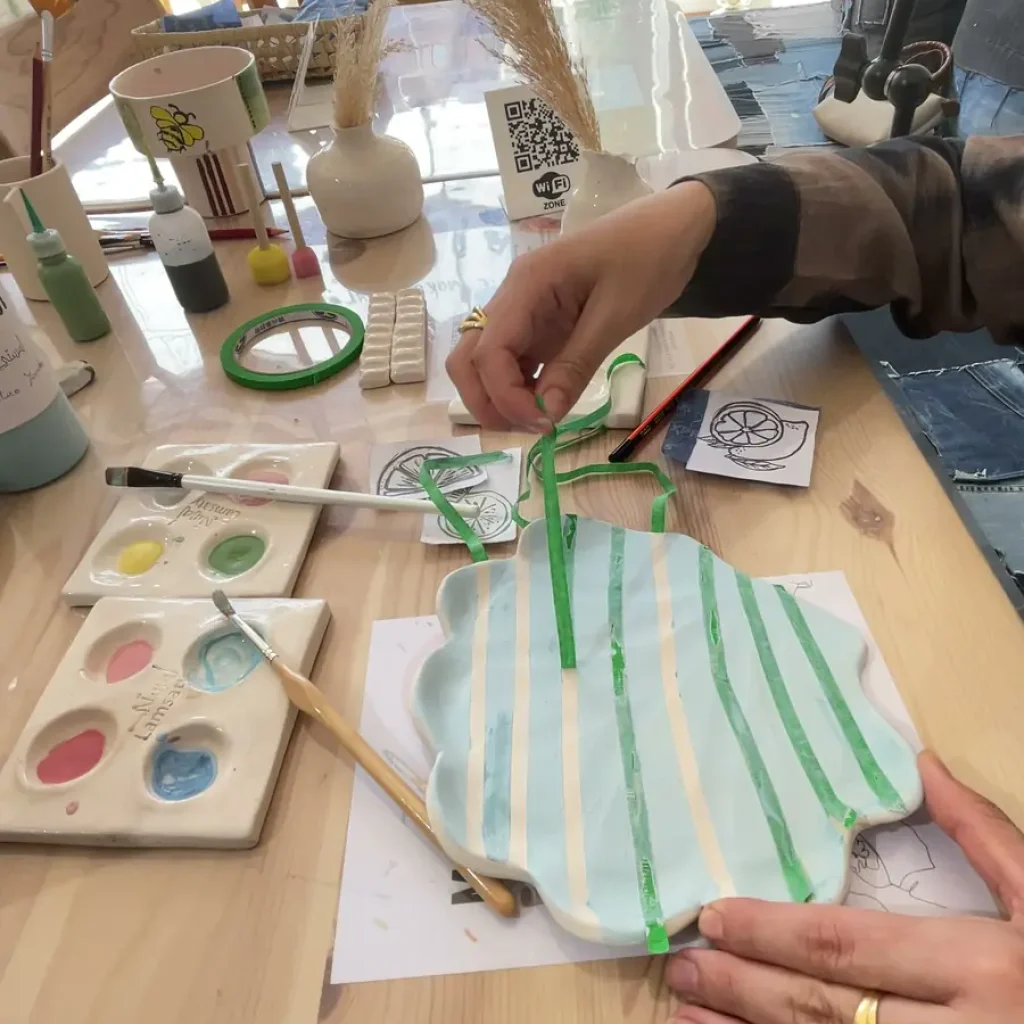
You sketch your design, then paint it step by step with the brushes and colours provided. The artisan helps with proportions, with steady brush strokes and with colour choices. Many guests find this the most calming part of their trip.
5. Take it home
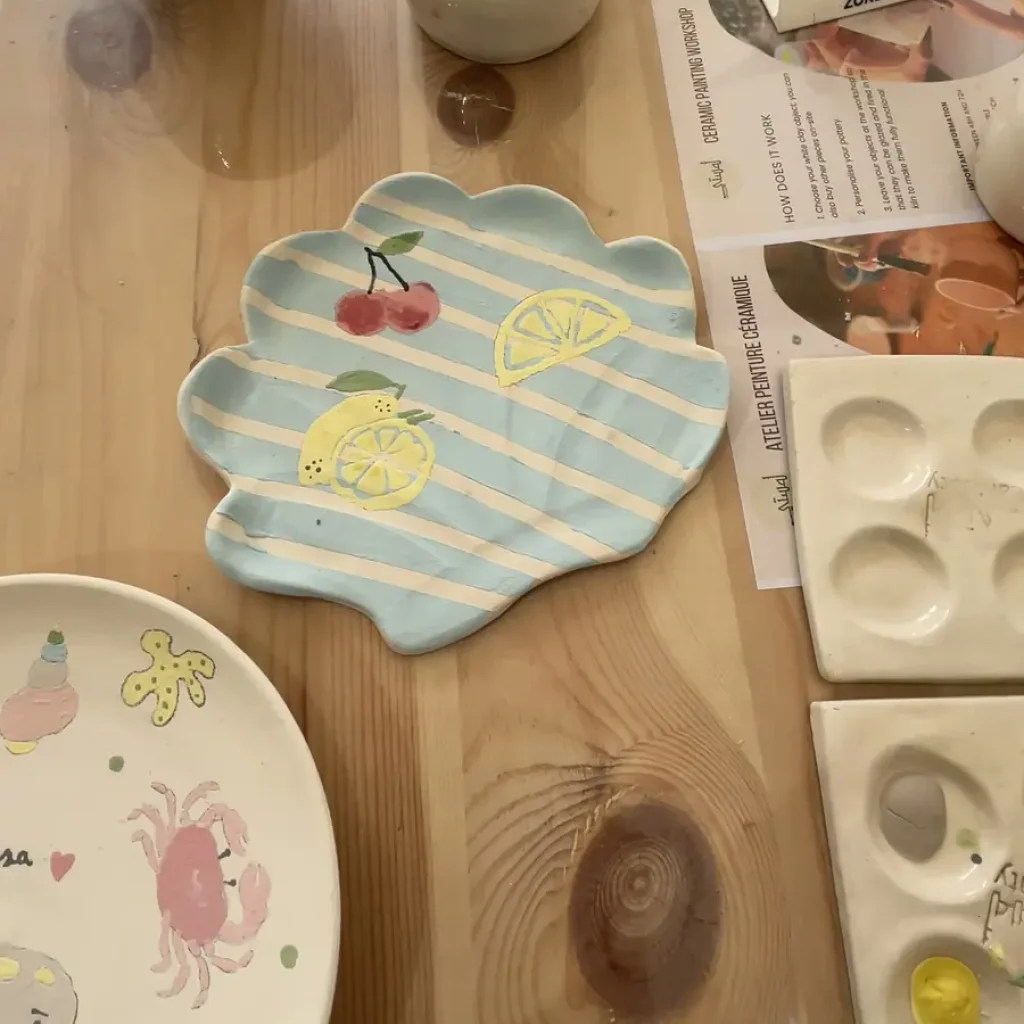
You leave with your finished, decorated piece.
The Moroccan motifs you will meet
The patterns you paint are not random. They come from a visual language that you will recognise across Marrakech once you know how to look. A few of the elements:
- Geometric stars and rosettes. Typical of zellige and of Moroccan architecture, they are built from repeated, symmetrical shapes.
- Interlacing lines. Lines that cross over and under each other, giving a sense of rhythm.
- Floral and vegetal details. Soft, curving forms that balance the geometry.
- Blues, greens and ochres. The colours you see on doorways, fountains and tableware across Morocco.
You are free to follow the traditional patterns closely, or to take them as a starting point for something more personal. Some guests paint their initials or a small scene, and some paint pure geometry. Both are welcome.
Which piece should you choose: plate, bowl or tile?
| Piece | Why choose it | Good for |
|---|---|---|
| Plate | Large, flat surface that shows a pattern clearly | Geometric designs, a centrepiece for a wall or a table |
| Bowl | Curved surface, inside and outside to decorate | A functional-looking piece, or a decorative object |
| Tile | Small, flat and easy to carry | Beginners who want a quick, tidy result, and children |
If you are unsure, a plate is the easiest first choice for most people, and a tile is a gentle option for younger children.
Do I need to be able to draw?
No. This is the most common worry, and the class is built to remove it. You are guided from the first brushstroke, and the motifs are geometric, which means they follow rules rather than needing artistic talent. In fact, people who say they cannot draw often make the neatest patterns, because they follow the artisan’s method carefully.
A few tips for beginners:
- Sketch lightly first. A light outline gives you something to follow and it is easy to adjust.
- Work from the centre outward. Geometric patterns grow from the middle. Placing the centre first keeps your pattern balanced.
- Limit your palette. Three or four colours usually look better than ten. Choose a main colour, a contrast colour and an accent.
- Let each colour settle. Painting next to a wet area can blur lines. Work on areas that are not touching, then come back.
- Keep the brush slightly loaded, not dripping. A controlled brush gives clean lines.
- Step back. Every few minutes, lift your piece and look at it from a distance. Mistakes and gaps are easier to see.
Three beginner-friendly design ideas
If you arrive without a plan, these three approaches give a good result with little experience. The artisan will help you adapt any of them.
- The central star. Start in the middle of a plate with a small eight-pointed star or rosette, then add a ring around it, then a border. Because the pattern grows outward from one point, it stays balanced. This is the safest way to use a geometric motif.
- The border and the open centre. Paint a band of repeating shapes around the edge of a plate or bowl, and leave the middle plain or add a single colour. It looks deliberate and elegant, and it is quicker than filling the whole surface.
- The two-colour tile. On a tile, use just two colours and a bold geometric shape. A restrained palette on a small surface reads as confident rather than empty.
For colours, a good rule is to pick one dominant colour, one contrasting colour and one accent. Blues and greens are very common in Moroccan decoration, and warm ochres add depth. If you are unsure, let the artisan suggest a combination when you choose your piece.
A calm activity, and a thoughtful gift
Many guests tell us that ceramic painting is the most relaxing hour of their trip. There is no deadline, no noise and no pressure to perform. For people who find a busy city tiring, an afternoon at a table with a brush and a cup of tea is a pleasant reset.
It also makes a personal gift. A plate or a tile that you painted yourself, with a pattern you chose, means more to the person who receives it than a souvenir bought in a shop. If you are travelling with friends or family, you can each paint a piece and swap them, or give them to people at home. If you would like to buy a handmade gift without a class, our shop sells ceramic cups, mugs, bowls and a plate made by artisans of Marrakech.
Choosing a time slot
The class runs Monday to Saturday at 10:00, 11:00, 15:00, 16:00 and 17:00. Which one to pick depends on your plans:
- 10:00 and 11:00. A relaxed morning activity, and a good choice if you want the rest of the day free for sightseeing. In summer it also avoids the heat of the afternoon.
- 15:00, 16:00 and 17:00. A calm afternoon after lunch, which suits travellers who like a slow morning. The 17:00 slot works well before an evening in the medina.
When you book, tell us your preferred slot and your group size, and we will confirm availability.
What is included, and what does it cost?
Ceramic painting starts from 40€ per person. The price includes:
- All ceramic painting materials and equipment
- Expert guidance from an artisan
- A complimentary hot or cold drink
- Your finished piece to take home
The class lasts two hours. It takes place Monday to Saturday at 10:00, 11:00, 15:00, 16:00 and 17:00, and groups of up to 40 people can be accommodated. It is available in Arabic, English, French and Spanish. Cancellation is free up to one day before the class.
How to prepare before you come
There is nothing to prepare, but a little inspiration makes the first minutes easier. Look at the tiles and doorways around your riad or hotel, and notice which colours and shapes you like. Decide whether you want to paint something calm and minimal, or colourful and busy. If you are painting with friends or family, think about whether you want your pieces to match or to be completely different. And if you have a specific person in mind as a gift, keep them in mind while you choose your piece and your colours.
Who is ceramic painting for?
- Complete beginners and first-timers. No experience is needed.
- Experienced painters who want to try a Moroccan style on a new surface.
- Couples and friends. It is a quiet, sociable activity: you talk, paint and compare results.
- Families. Groups, couples and families enjoy it together, and children aged 5 and above are welcome. See our guide to family workshops in Marrakech.
- Residents. A relaxed afternoon, a creative gift, or a way to introduce a visiting friend to Moroccan craft.
- Groups and events. Up to 40 people can paint together, which suits birthdays and team activities. Contact us to plan it.
What to wear
Ceramic painting is cleaner than pottery, but paint is still paint. Wear clothes you do not mind marking slightly, and tie back long hair. You can keep your jewellery on in most cases, though it is wise to avoid bracelets that rub against wet paint. A hot or cold drink is provided, so you do not need to bring your own.
Ceramic painting, pottery or zellige?
All three of our workshops last two hours, are beginner friendly and are led by artisans, but the experience is different.
| Workshop | What you do | From | Best if |
|---|---|---|---|
| Ceramic painting | Paint a plate, bowl or tile with traditional motifs and keep it | 40€ | You prefer colour, drawing and a calm pace |
| Pottery | Wheel throwing, hand-building and glazing | 40€ | You want to shape clay with your hands |
| Zellige | Cut and assemble tile mosaic, take a small piece home | 60€ | You love geometry and a physical craft |
If you want to shape clay and see how a piece is built from nothing, take a look at our guide to pottery classes in Marrakech for beginners. If you are fascinated by the geometry of Moroccan walls, our guide to the zellige workshop in Marrakech explains how mosaic is cut and assembled.
How to book
Message us on WhatsApp at +212 660 86 10 10 with your preferred date, time slot and number of guests, or choose your date and book online on the ceramic painting page. You can also write to book@potteryclassmarrakech.ma. Bookings are made through our office in Guéliz, and the workshop address follows your confirmation.
If you want something handmade to take home without a class, browse our shop of ceramic cups, mugs, bowls and a plate, made by artisans of Marrakech.
Frequently asked questions
Do I need painting experience?
No. You are guided from the first brushstroke, and the artisan teaches you how to hold the brush and build geometric motifs.
What can I paint?
You choose a plate, a bowl or a tile from the shelves of white ceramics.
How long does the class take?
Two hours.
What times are available?
Monday to Saturday at 10:00, 11:00, 15:00, 16:00 and 17:00.
Do I take my piece home?
Yes. You leave with your finished, decorated piece.
Is a drink included?
Yes, a complimentary hot or cold drink.
What languages are available?
Arabic, English, French and Spanish.
How many people can join?
Bookings start from one guest, and groups of up to 40 people can be accommodated.
Can I cancel?
Cancellation is free up to one day before the class.
Ready to paint your own piece? Book your ceramic painting class in Marrakech or message us on WhatsApp.

Comment (0)