
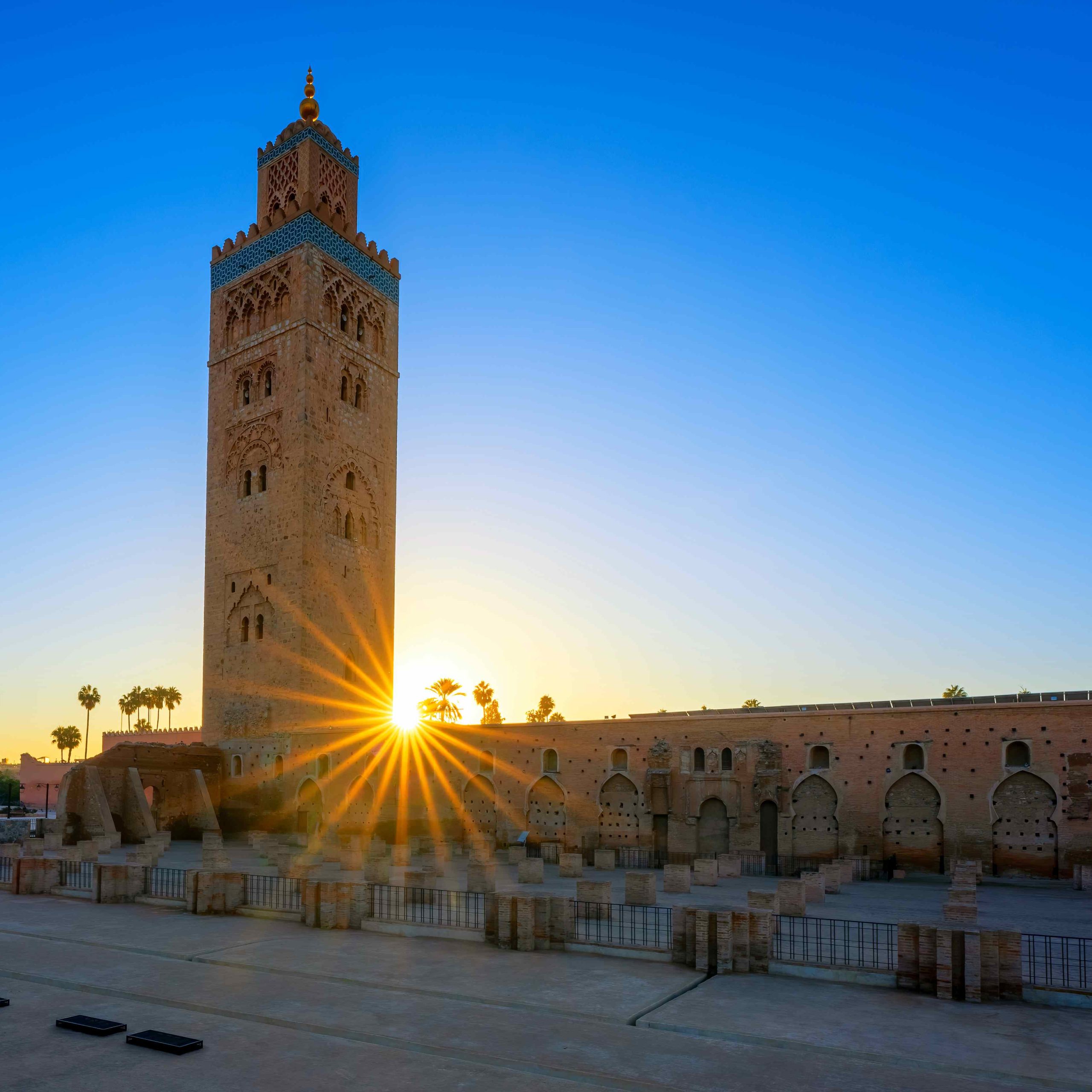
It has stood tall through time, witnessing history untouched by the passing years. Built in the heart of Marrakech, the city of palm trees, it became a symbol and a source of pride for its residents. Even devastating earthquakes couldn’t bring it down or cause it to crumble. Yes, it is the Koutoubia, the Koutoubia Mosque.
The Beginning of the Koutoubia Mosque
One of the world-renowned landmarks of Marrakech, the Koutoubia sits in the old city, directly in front of Jemaa el-Fna Square. Three kings of the Almohad dynasty constructed it, starting in 1147 AD with the first mosque and finishing the minaret in 1199 AD. In fact, the Koutoubia consists of two mosques, not just one as many might think. They are similar and connected by a single minaret.
Why It’s Called the Koutoubia Mosque
The mosque earned the name “Koutoubia,” or “Mosque of the Booksellers,” for a simple reason. Book vendors gathered in large numbers around it, with estimates of about 100 sellers. However, no traces of them remain today, as their presence was confined to the early years of the mosque’s history.
Architectural Features of the Koutoubia
The Koutoubia Mosque spans over 5,000 square meters, and the prayer hall alone covers nearly 3,000 square meters. The mosque is adorned with around 11 domes made from maple wood, and it has eight doors to allow easy access for worshippers.
The Koutoubia Today
Today, hundreds of years after its construction, this magnificent monument remains a source of pride for Moroccans and a symbol of Islamic history. It has become a major tourist destination, and no one mentions Marrakech without recalling this historic landmark. Although it closed for repairs after the earthquake that struck Morocco, this hasn’t diminished its grandeur.

Comment (0)